 Evening Read
The First Three Words on This Idaho Label Are "Shake Well Before Use."
Five organic herbs in a one-ounce bottle of glycerin, 1,755 milligrams of them in every serving, and no amount printed beside any single one. I read the label line by line.

This is a paid advertisement. Sponsored by Plant Therapy, Inc.

Clyde Merriman is the pen name of this desk.
Everything on this page about the bottle comes from the maker's own product page, the photograph of its Supplement Facts panel and its published store terms.
There is a shelf in the pharmacy on the corner here that the pharmacist calls the herb wall, and nobody behind the counter will read a label to you.
You are expected to do that yourself, standing up, with your glasses on.
A neighbor handed me a small amber bottle across the porch rail three weeks ago and asked me what I made of it.
One fluid ounce, a glass pipette in the cap, five plant names on the back, and one number.
So I did what I do with every bottle that reaches this desk. I started at the top of the directions.
The directions on this bottle begin with three words before they say anything about a serving, a time of day or a glass of water.
Shake well before use.
Most people read straight past that line, because every bottle says something like it.
It is the most informative sentence on the whole label, and it is the reason I bought a bottle of my own to look at.
A thing you have to shake is a thing that separates.
What is inside this bottle is five plant extracts suspended in vegetable glycerin, and glycerin is thick, sweet and heavy enough that plant matter settles toward the bottom of it while the bottle stands on a shelf.
Shake it and you get roughly the same mixture in the first serving as in the last.
Skip the shake for three weeks and you do not.
That is the whole argument of the first paragraph of this page, and everything else follows from it.
What follows is a full reading of the label, in the order the label prints it.
It runs long, because a label runs long if you do it properly, and because the most important thing on this one is a number that five different plants have to share.
Why a Bottle Like This One Has to Be Shaken
Start with what the liquid actually is, because it decides how the rest of the label behaves.
This is a liquid extract: plant material soaked in a solvent until the solvent carries the parts of the plant that dissolve, then pressed and bottled.
The solvent here is organic vegetable glycerin and purified water, and there is no alcohol in it at all.
That matters more than it sounds.
Most liquid herb extracts on the shelf beside this one are made with grain alcohol, because alcohol is the more efficient solvent and it keeps the bottle stable for years.
Glycerin is the milder choice and the harder one.
It is a thick, clear, sweet liquid that pulls a narrower range of plant compounds than alcohol does, and it holds them in suspension rather than in true solution.
So the maker asks you to shake.
Not as a formality: as the step that makes your Tuesday serving resemble your Friday serving.
(image pending · 800×450)
There is a second consequence, and it is the one nobody mentions in the aisle.
A glycerin extract is sweet on its own, which is why the maker can describe the taste as sweet and spicy and suggest you take it in water, juice or tea.
Sweetness is not a claim about anything.
It is a property of the solvent, and it is the reason a lot of people who cannot stand the burn of an alcohol extract can live with this one.
Read "shake well" as a sentence about physics, not housekeeping, and the rest of the panel gets easier to read.
One Number, Five Plants, and the Split That Is Not Printed
Turn the bottle around and the Supplement Facts panel is short enough to read in one breath.
One serving is 1.5 milliliters, and that serving carries 1,755 milligrams of an organic extract blend.
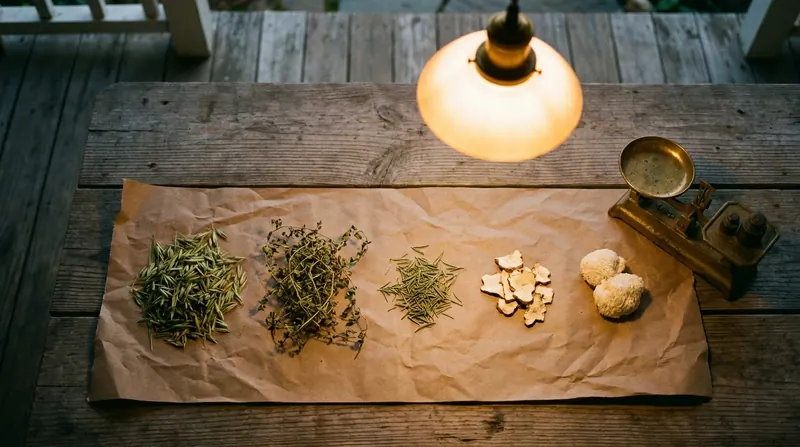
Underneath, five plants are named in order: oat seed picked at the milky stage, gotu kola, rosemary leaf, licorice root and lion's mane fruiting body.
Beside the five names, individually, there is nothing.
One number for five plants, and no split.
This is a proprietary blend, and it is legal, common and entirely the maker's right.
The rule in the United States is that the total weight of a blend must be declared and the plants must be listed in descending order of weight; the amount of each one may stay the company's business.
What you can conclude from the order is narrow but real.
There is more oat seed extract in that 1,755 milligrams than gotu kola, more gotu kola than rosemary, more rosemary than licorice, and least of all the lion's mane.
What you cannot conclude is anything about proportion.
The first plant might be 900 milligrams of the total or it might be 400, and the last might be 200 milligrams or 40, and no reading of the panel will tell you which.
I want to be fair about why a company does this.
A blend ratio is the one thing a competitor can copy off the back of your bottle in a supermarket aisle, and an herb company that spent years on a formula does not enjoy handing it over.
But the cost falls on you, and it falls in exactly one place.
Every study I am about to describe tested one plant, on its own, at a stated weight. Without a split, you cannot line this bottle up against a single one of them.
So this page does the next most honest thing.
It puts each plant beside its own research at the amount that research used, tells you what that amount was, and lets you see how much room 1,755 milligrams leaves once it is divided five ways.
Hold one figure in your head for the rest of the page: 1,755 milligrams, shared.
The Other Ingredients, and the Five Calories Nobody Mentions
Under the five plant names, the panel prints one more line, and most readers skip it entirely.
Other ingredients: organic vegetable glycerin and purified water.
That is the whole rest of the bottle, and it is worth two minutes because it is most of what you are swallowing by volume.
Vegetable glycerin is a clear, thick, sweet liquid made from plant oils.
It is in toothpaste, in frosting, in soap and in a great many medicines, and it is one of the most ordinary substances in a pharmacy.
In this bottle it is doing three jobs at once.
It is the solvent that pulled the plant compounds out, the carrier that holds them, and the preservative that keeps the bottle stable without alcohol.
It is also, and this is the part that surprises people, a carbohydrate.
A serving this size carries only a few calories, which is nothing at all in a day, but it is not zero and a man counting carbohydrates carefully should know the line exists.
The purified water is there to thin the glycerin enough to pour and to squeeze.
Pure glycerin is close to syrup, and a pipette full of syrup is not a pleasant piece of engineering.
One practical consequence of a glycerin base, and it is the one people write to sellers about.
Glycerin thickens in the cold, so a bottle kept on a windowsill in January will squeeze harder than the same bottle in July.
Keep it in a cupboard at room temperature, upright, with the cap screwed down.
Heat and sunlight are what degrade a plant extract, and a kitchen cupboard away from the stove solves both for nothing.
There is one more thing the panel does not print, and I would like it printed.
There is no extraction ratio anywhere on this label: no statement of how many grams of dried plant went into each milliliter of liquid.
In the liquid-extract trade that ratio is usually written as something like 1:4 or 1:5, and it is the single figure that lets you compare one bottle against another on the same shelf.
Without it, 1,755 milligrams of extract is a weight of extract, not a weight of plant, and those are different things.
The number on this panel tells you what came out of the jar, not what went into it.
That is a real gap and I am not going to soften it.
It is also, in fairness, how most whole-plant liquid extracts on that shelf are labeled, which makes it an industry habit rather than a company's choice.
The Oat That Is Picked Green, and the Two Trials That Disagree
The first plant on the list is oat, and it is not the oat in your bowl.
Breakfast oats are the ripe, dried grain; the herbal ingredient is the same plant cut while the seed head is still soft and green, and the seller's own description calls it milky oat seed.
Squeeze one of those green heads between your fingers in July and a white drop comes out.
That drop, and the plant around it, is what goes into the jar.
This is the plant with the most weight behind it in the blend, because it is printed first.
It is also the plant with the most interesting pair of trials of the five.
In a 29-day placebo-controlled trial of 132 healthy adults aged 35 to 65, a green oat extract was associated with better performance on a working-memory task and a multitasking test than placebo. [1]
That is a real trial, with a real control group, and it came out in favor of the plant.
Two things sit beside it.
The extract used was a concentrated ethanol extract in capsule form at 430 to 1,290 milligrams, and the work was paid for by the company that makes that extract.
Now the second trial, which is the one a man of sixty-eight should read first.
In a 12-week placebo-controlled trial of 37 healthy adults around the age of 67, a daily green oat extract at 1,500 milligrams did not change any measure of thinking that was tested. [2]
Same plant, a longer trial, closer to my age, and nothing.
I am not going to pretend those two results cancel each other out neatly, because they used different extracts, different people and different tasks.
What they do is set the honest expectation: the plant with the best paperwork in this bottle has one positive trial in middle-aged adults and one null trial in older ones.
And both used a concentrated capsule extract at a stated weight.
This bottle prints 1,755 milligrams for five plants together, so whatever share of that the oat holds, it is a fraction of the 1,500 milligrams that changed nothing in the older group.
Best-documented plant on the label, and the documentation does not say what the front of the bottle implies.
(image pending · 800×450)
Gotu Kola: A Salad Green With One Small Positive Trial
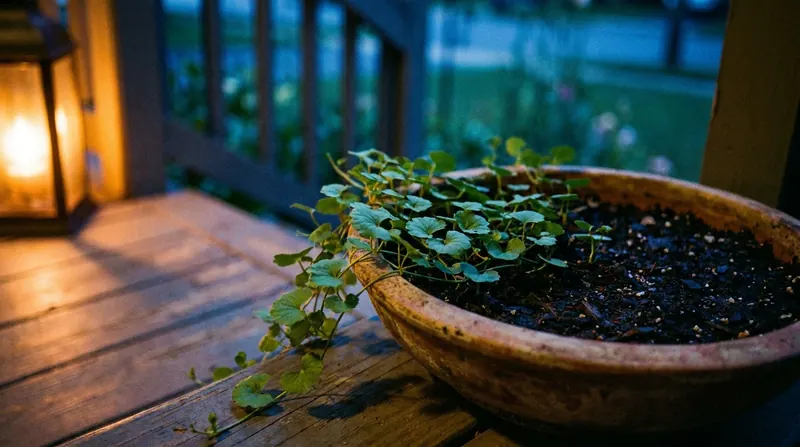
Second on the list is gotu kola, which grows as a low creeping plant with round, fan-shaped leaves in wet ground from India to Australia.
In a good part of South and Southeast Asia it is food: eaten fresh, in salads, in a cold drink.
That is worth saying before anything else, because it sets the register.
This is not an exotic compound; it is a leafy green with a long record in Ayurvedic and Chinese practice.
The trial people cite is small and specific.
In a two-month placebo-controlled trial of 28 healthy older adults, the highest dose tested, 750 milligrams a day of a gotu kola extract, was associated with better working-memory performance and higher self-rated alertness. [3]
Twenty-eight people, split across several groups, which is about seven people per group.
Only the top dose moved, and the extract was a water extract in capsules, not a liquid extract in glycerin.
Then somebody pooled the randomized trials of the plant.
A 2017 meta-analysis found no significant effect of gotu kola on cognitive test scores compared with placebo, while it did find higher self-rated alertness. [4]
Read that pair carefully, because it is the shape of this whole field.
People taking the plant said they felt more awake; the tests they sat did not agree.
I do not think that makes the feeling worthless.
I think it makes it a feeling, which is a different thing from a result, and a label that charges you money should keep the two apart.
For the bottle on the porch rail, the arithmetic again.
Seven hundred and fifty milligrams was the dose that moved in that small trial, and the second-largest share of a 1,755-milligram five-plant blend cannot be more than a few hundred.
Second plant, second time the studied amount sits above anything this bottle can hold.
Rosemary, Where More Was Worse
Third on the list is the one plant on this label you almost certainly already own.
Rosemary is a small evergreen shrub of the mint family, it grows on dry Mediterranean rock, and there is probably a jar of its leaves in your kitchen.
It has carried the association with memory for a very long time, since well before anyone measured anything.
Ophelia hands it over as rosemary for remembrance, and folklore ran with it for four centuries.
The modern measurement is one small crossover trial, and it is the most quietly useful result on this page.
In 28 adults with an average age of 75, a single 750-milligram dose of dried rosemary leaf, close to a culinary amount, was associated with faster speed of memory compared with placebo, while a much larger dose of 6,000 milligrams had the opposite effect. [5]
Three quarters of a gram helped. Six grams hurt.
That is the sentence I would put on the wall of every supplement aisle in the country.
The dose-response curve for a plant is not a staircase, and "more of a good herb" is an assumption, not a finding.
Notice also what was tested: dried leaf, close to the amount you would use in cooking, in a single dose, with the effect measured the same day.
Not a concentrated extract, not twelve weeks, not a blend.
So rosemary is the one plant here where the useful amount is small enough that a five-way blend could plausibly reach it.
I cannot tell you that it does, because the split is not printed, and third of five in descending order puts a ceiling on it that I cannot see.
There is a cheaper move available to you, and I am going to say it even though this is an advertising page.
A jar of dried rosemary costs about three dollars, and 750 milligrams of it is roughly a third of a teaspoon of crushed leaf.
That does not make the bottle pointless. It does mean the rosemary line is the one you can test in your own kitchen for the price of a jar.
(image pending · 800×450)
Licorice Root, Which Is There for the Taste and Carries a Caution
Fourth on the list is licorice root, and this is the line where I have to be straightest with you.
I could not find a trial of licorice root on memory, attention or concentration in healthy adults to cite.
Not a small one, not a weak one, not one in the wrong age group. Nothing I would put a number beside.
That is not a scandal either, because licorice is very probably not in this bottle for that reason.
It is one of the oldest recorded herbs on earth, it turns up in Assyrian, Egyptian, Greek, Chinese and Indian records, and in traditional Chinese formulas it is the ingredient added to round out and harmonize everything else.
It is also naturally sweet, which in a glycerin extract that you are asked to take in water is a practical decision, not a botanical one.
The seller's own description of the taste as sweet and spicy is doing exactly what it says.
Here is the part to take to your pharmacist.
Licorice root contains glycyrrhizin, and in large amounts or over long stretches it can raise the pressure in the arteries and lower potassium.
The published guidance on the herb advises particular care for people who eat a lot of salt, and for anyone taking something daily for the heart and circulation or for the kidneys; the caution is set out in full, with its source, in the ingredient guide linked at the foot of this page.
Take it as the label directs, do not exceed the stated use, and ask first if you are already taking anything every day.
I put this in the middle of the page on purpose rather than in a box at the bottom.
It is the only ingredient on this label with a caution worth a conversation before the first serving, and it is fourth of five, which tells you the amount is small.
Small is not zero, and the label's own directions allow three servings a day.
Three servings is three times whatever share of 1,755 milligrams the licorice holds, every day, for as long as you keep buying bottles.
Take the bottle with you to the counter and ask about the licorice before you ask about anything else on it.

Lion's Mane, and the Distance Between 3.2 Grams and a Bottle This Size
Fifth and last on the label is lion's mane, an edible mushroom that grows in shaggy white cascades on old beech and oak in temperate forests, including plenty of American ones.
People eat it. The texture gets compared to crab.
It is also the ingredient that sells more bottles in this category than any other right now, which is why it is worth knowing that it is printed last here.
The trial everyone quotes is genuinely in the right people.
In a 12-week placebo-controlled trial of 31 healthy adults over 50, a daily lion's mane fruiting-body preparation at 3.2 grams a day was associated with higher scores on a standard mental-status test than placebo. [6]
Thirty-one people analyzed, in Japan, on one test.
A visual-retention test in the same trial did not change.
Now the number that matters.
Three point two grams a day is 3,200 milligrams, which is nearly twice the entire 1,755-milligram blend in this bottle, before you divide that blend five ways and before you remember that the mushroom is printed last.
There is a second trial, smaller and newer.
In 41 healthy adults aged 18 to 45, a single 1.8-gram dose was associated with faster performance on a word-and-color task an hour later, while 28 days of the same supplement produced only a non-significant trend on a self-rated measure. [7]
Eighteen hundred milligrams again, in adults young enough to be your children.
Neither trial is close to what a fifth share of this blend can deliver, and no honest reading of the panel gets around that.
The most fashionable plant on this label is the one furthest from its own evidence.
If lion's mane is what you are after, and it might be, the shelf sells it by the gram in capsules and in powders made for coffee.
That is a different purchase from this one, and pretending otherwise would be the easiest lie on this page.
(image pending · 800×450)
Why Five Plants at All, and Not One
Stand back from the panel for a moment and ask the question a chemist would ask.
If oat seed has the best trials, why not sell a bottle of oat seed?
There are three honest answers and a fourth that nobody says out loud.
The first is tradition. Herbal practice has built compound formulas for two thousand years, in Europe, in China and in India, on the working belief that plants in combination behave differently from plants alone.
That is a real tradition with real craft in it, and licorice sitting fourth on this list, where a Chinese formula would put its harmonizing herb, is a tell that somebody in Idaho knows the tradition.
The second is coverage. Five plants aimed at roughly the same everyday territory give a buyer more chances of responding to at least one of them, which is a reasonable bet when nobody can test you in advance.
The third is taste and stability. A single-plant rosemary extract is harsh, and licorice makes almost anything drinkable.
And the fourth, the one that is never printed: a blend cannot be compared.
A bottle of one plant at one weight can be lined up beside the trial of that plant at that weight, and it either matches or it does not.
A blend of five with one shared number cannot be lined up against anything, and that is worth something to whoever prints the label.
I do not think that is the main reason this formula exists. I do think it is a consequence the company is aware of.
So where does that leave a man holding the bottle?
With a formula that is coherent as traditional herbalism and impossible to audit as arithmetic, which is an uncomfortable pair of sentences to hold at once.
My own view, for whatever a reader's view is worth on a page like this one.
If you want to run an experiment you can interpret, buy one plant at a stated weight; if you want the old formula as the old formula, this is a competently made version of one.
Both of those are defensible purchases. They are not the same purchase, and the front of the bottle does not distinguish them.

Thirty Milliliters, Twenty Servings, and Somewhere Between Seven and Twenty Days
Now the arithmetic that decides what this bottle actually costs you, which nobody does standing in an aisle.
The bottle holds 30 milliliters, which is one fluid ounce.
One serving is two squeezes of the glass pipette, and the maker puts that at about 1.5 milliliters.
Thirty divided by one and a half is twenty.
Twenty servings in the bottle, and the label's directions allow one to three of them a day.
At one serving a day, the bottle is twenty days.
At two, it is ten. At three, it is under a week.
The same bottle is a three-week supply or a six-day supply, and the label lets you choose without telling you which it means.
That range is not sloppiness.
It is how directions on herbal liquids are usually written, and it exists because the maker cannot know whether you weigh 150 pounds or 250, or whether you are taking it once in the morning or with every meal.
But it puts a decision on you before the first serving, and it is the single most practical decision on this page.
Pick your number, write it on the side of the box with a marker, and do not drift.
If you drift, you have learned nothing at the end of the bottle.
You will not know whether the three weeks you just spent were one serving a day or two, and neither will I.
There is one more figure worth having.
At one serving a day a bottle lasts twenty days, so a month of steady use is a bottle and a half, and a season is closer to five bottles.
Do that multiplication before you decide this is inexpensive.
A bottle that looks cheap on a product page is a different proposition when the honest unit is not the bottle but the month.
(image pending · 800×450)
Ninety Days, and the Part About an Opened Bottle
Most return windows in this business are thirty days, and most of them end the moment the seal is broken.
This one does neither, and it is the strongest single thing on the label.
The seller's published terms give you 90 days from the date of purchase to send a product back for a full refund.
Ninety days is three times the usual window and roughly four and a half bottles at one serving a day.
And the terms cover opened and used product.
The refund is calculated against what is left in the bottle, which is a sentence most companies would not write down.
After the 90 days, the terms switch to account credit rather than money returned.
So the window is real, it is generous, and it has an edge; put the purchase date somewhere you will find it.
I want to be precise about why this matters more than any plant on the label.
A long return window is the only claim on a supplement box that the company has to honor whether or not the product does anything.
Everything else is a statement about biology with an asterisk attached.
Ninety days is a statement about the company, and you can hold them to it with a telephone.
The number to call is 800-917-6577, Monday to Saturday, eight to six Mountain time.
The address for the company is 621 Washington St. S., Suite 100, Twin Falls, Idaho, and the email is cs@planttherapy.com.
Shipping is a separate matter and the honest version is short.
Shipping is not included on a single order; the seller only waives it on recurring subscription orders, and this page is not asking you to start one.
Ninety days on an opened bottle is the reason a twenty-serving test is a reasonable thing to run at all.
Who Is Actually Behind It, and What That Is Worth
The company is Plant Therapy, Inc., of Twin Falls, Idaho, and most of what it sells is not this.
It is primarily an essential-oil house, which is to say it spends most of its year on things you are not supposed to swallow.
I mention that for two reasons, and neither is an insult.
The first is that an oil company has a real laboratory habit, because oils are tested for adulteration constantly and cheaply, and that habit tends to travel across a catalog.
The second is that this bottle is a sideline, not the flagship, and you should know it when you buy.
A five-herb liquid extract from a house built on lavender is a different object from a five-herb liquid extract from a house that has made nothing else for forty years.
What the label does carry is a certification I can check.
It is certified organic by ECOCERT, which is an independent certifier, and the bottle states that it is manufactured in the USA.
Organic is a claim about how the plants were grown, and it is audited.
It is not a claim about potency, about standardization, or about whether 1,755 milligrams of anything does what the front of the bottle implies.
There is one more thing the panel does not print, and I want it said plainly.
There is no standardization percentage anywhere on this label: no statement of how much of any marker compound a milligram of this extract carries.
That is normal for a whole-plant liquid extract and it is still a hole.
It means the strength of the extract is the maker's to declare, and the only figure you are given is total weight.
A street address, a telephone, an organic certificate, and one number on the panel.
Those first three are more than several bottles on that same shelf can manage, and I will say so.
They are facts about the company, not about the plants, and this page keeps the two apart on purpose.

What the Label Asks of You Before the First Serving
Under the directions there is a short block of small type, and it is the least-read paragraph on any supplement box in America.
On this one it says four things.
- Keep the bottle out of reach of children.
- Talk to a clinician before use if you have a health condition or take anything daily.
- The cap carries a tamper-evident seal; do not use the bottle if the seal is broken.
- Shake well before use, which the label prints at the top of the directions rather than the bottom.
The second of those four is not boilerplate here, and I said why four sections ago.
The licorice line is the reason to have the conversation, and the conversation takes ninety seconds at a pharmacy counter.
The way to have it is to bring the bottle.
Not the name, not a photograph of the front, the actual bottle with the panel on the back, and everything else you take every day in the same bag.
Ask one question: is anything in this bag a poor fit with anything else in it, at my age.
That question is worth more than every paragraph above it on this page.
I would add a second question for this particular bottle, and it is about the licorice.
Ask whether the amount in a five-plant blend taken up to three times a day is something to watch if you already take something every day for the heart and circulation.
The Words on the Front, and the Asterisk After Them
Turn the bottle back around.
The front panel says Brain Power in large letters, and under it, in a small oval, the words "Promotes Focus & Clarity" with an asterisk.
That asterisk is the most heavily negotiated character on the whole package.
It points to the statement, printed somewhere on every bottle like this one, that the claim has not been evaluated by the Food and Drug Administration.*
The wording of the front panel is not accidental either.
"Promotes" is a structure-and-function verb, which is the only kind of verb a supplement is allowed to use about a normal body process.
The maker's own longer description goes a little further than the oval does.
It says the blend aims to sharpen memory and mental agility, and speaks of promoting focus, concentration and overall cognitive function.
That is the maker's language about its own product, and this page is not going to repeat it as though it were a finding.
What I can tell you is what the five trials above measured, in whom, at what weight, and how far each weight sits from a fifth of 1,755 milligrams.
Here is the distinction I would like you to carry out of this page.
A label that says "promotes" is making a permitted claim about a normal process; a study that reports a result is making a measurement in a set of people who are not you.
Those are two different kinds of sentence and they get printed next to each other constantly.
Keeping them apart is most of what reading a supplement label well consists of.
(image pending · 800×450)
How It Is Actually Taken, and Why That Is Not a Small Question
The label offers three ways to take it: straight, or in water, juice or tea.
People being people, almost everyone ends up doing one of the last three, and the reason is taste.
A glycerin extract is sweet, and five plants in it are not.
Rosemary is resinous, licorice is sweet in a heavy way that some people find medicinal, and the description the seller uses is sweet and spicy herbal flavor, which is fair notice as much as a sales line.
I mention this because a supplement you dislike is a supplement you stop taking in week two.
The most common reason a twenty-serving test fails is not the plants; it is that nobody planned how to get the stuff down.
So plan it once. A third of a glass of cold water, or a mouthful of orange juice, swallowed quickly.
Warm tea works and mutes it further, and the maker suggests it.
One caveat on the tea, and it is a small piece of kitchen physics.
Glycerin thins in heat and the extract will mix more readily, but very hot liquid is unpleasant to drink quickly, so let the cup cool to the temperature you would actually drink before you add anything.
Then attach it to something that already happens every day at the same hour.
The chair on the porch after the dishes, the second coffee at ten, the walk to the mailbox: the anchor matters more than the hour.
Decide the glass, decide the hour, and decide the number of servings, before the bottle arrives rather than after.
Four Cheaper Explanations, and I Would Try Them First
Here is the section that costs me money to write, and it goes in the middle of the page rather than the end.
If the afternoons have gone foggier this year, four ordinary things explain more of that, in more people, than anything in a one-ounce bottle.
None of them is sold by anybody.
Water. In the Berlin Aging Study II, 1,111 adults aged 60 to 89 were followed over time, and about a third of them were measurably short of fluid.
Those adults showed a steeper fall on a processing-speed test and in well-being than the rest, independent of their other characteristics. [8]
A 2021 review of 18 studies covering 33,707 adults aged 60 and older reached a careful version of the same thing, and the authors were honest that the evidence linking fluid to thinking is sparse. [9]
Both are observational, so neither proves cause, and the correction costs nothing.
The hour. Almost everyone in their late sixties has a good hour and a bad one, and most people schedule the hardest thing in the day into the bad one out of habit.
Move the paperwork, the phone calls and the checkbook to your good hour for two weeks and see what is left of the problem.
Your hearing. Straining to hear a conversation looks a great deal like not remembering it, and the two are very hard to tell apart from the inside.
A hearing check is an afternoon, and it costs less than a season of any bottle on that shelf.
The shape of what you eat. In a three-year randomized trial of 604 older adults with normal thinking, a group eating the MIND pattern and a group simply eating a little less both improved their overall scores, with no significant difference between them. [10]
Vegetables, whole grains, beans, nuts, olive oil, berries and fish are ordinary groceries, and eating more of them is untroubled by every caution on this page.
If one of those four is the answer, this bottle will never be, and you will have spent five bottles finding that out.

Four Questions I Would Ask If They Picked Up the Telephone
The number on the store page is answered by people six days a week, which is more than most of this shelf manages.
If you are the kind of man who will actually call, here are the four questions worth the call, in order.
One. What is the extraction ratio?
Ask how many grams of dried plant went into each milliliter of the finished liquid, because that is the figure the panel leaves out and the only one that makes bottles comparable.
Two. Can you tell me the share of lion's mane?
They may refuse, and refusing is their right, but the answer to "is the mushroom a tenth of the blend or a fiftieth" is the difference between a real ingredient and a name on a label.
Three. Is the finished bottle tested, or only the raw plants?
Certified organic covers how the plants were grown; it says nothing about what the finished liquid was checked for, and a company with a laboratory habit will answer this one happily.
Four. How does the refund work on an opened bottle?
The published terms say opened product is covered and refunded against what is left, so ask them to say it back to you and write down the name of whoever does.
Four questions, six minutes, and you will know more about this bottle than this entire page can tell you.
I would make the call before the purchase rather than after it.
One note on how to ask.
Customer service people answer questions about their catalog all day and almost never get asked anything technical, so ask plainly and expect to be transferred.
If the answer to any of the four is "I don't know," that is also an answer.
It is not a scandal, it is a data point, and it costs you nothing to collect.
How to Run Twenty Servings So the Answer Means Something
If you are going to spend the money, spend it in a way that produces an answer rather than an impression.
Here is the whole method, and it fits on an index card.
- Ask the pharmacist first, with the bottle in your hand and everything else you take in the same bag.
- Buy one bottle. Not three, not a subscription.
- Decide before it arrives whether you are taking one serving a day or two, and write that number on the box.
- Write the purchase date on the box too, because the 90 days runs from it.
- Shake the bottle every single time, which is the one instruction the maker put first.
- Pick one hour and one glass, and do not move either for the length of the bottle.
- Keep one line a night: the date, and one sentence about the afternoon.
- At the end of the bottle, read the lines instead of trying to remember how it went.
That last step is the whole point, and almost nobody does it.
Memory of how your memory felt three weeks ago is the least reliable instrument in the house, which is exactly why you write it down while it is happening.
Twenty lines in a notebook is a small amount of evidence, and I am not going to dress it up as a trial.
It is, however, evidence about you, which is the only kind that decides whether you buy a second bottle.
And if the lines say nothing changed, the 90 days is still open.
That is the arrangement this particular seller offers, and it is the reason a one-bottle test is a defensible thing to do.
One more caution about the test itself.
Do not change the walking, the water, the hour or the coffee in the same three weeks, or you will have run four experiments at once and learned nothing from any of them.
(image pending · 800×450)
Where This Bottle Sits on the Shelf
I will put the whole thing in one place before the practical details.
Five organic plants in glycerin, with no alcohol, in a bottle that holds twenty servings and asks to be shaken.
One number on the panel for all five of them together, and no split printed between them.
The plant with the best paperwork, oat seed, has one positive trial in middle-aged adults and one null trial in adults around 67.
The plant everyone comes for, lion's mane, was tested at nearly twice the weight of this entire blend.
Rosemary is the one line where a culinary amount is the studied amount, which is a genuine point in the bottle's favor and also something you can buy in a jar.
Gotu kola felt like something to the people who took it and did not show up on the tests when the trials were pooled.
Licorice is there for the taste and brings the one caution on the label worth a conversation.
And the company prints a street address, answers a telephone six days a week and takes an opened bottle back inside 90 days.
That is the bottle, with nothing added and nothing left out.
Sold by Plant Therapy, Inc. on its own store, and that is the only place this page sends you.
The price is the seller's to set and it moves, so this page prints none; look at it, and at the shipping line for your address, before you click.
Every plant printed on this label, what it is, the amount its own research used and the cautions in full, is written out in the ingredient guide linked at the foot of this page.
That guide also carries the references, the advertising disclosures this page is required to make, and the honest verdict on each headline we run.
One amber ounce, from the house in Twin Falls
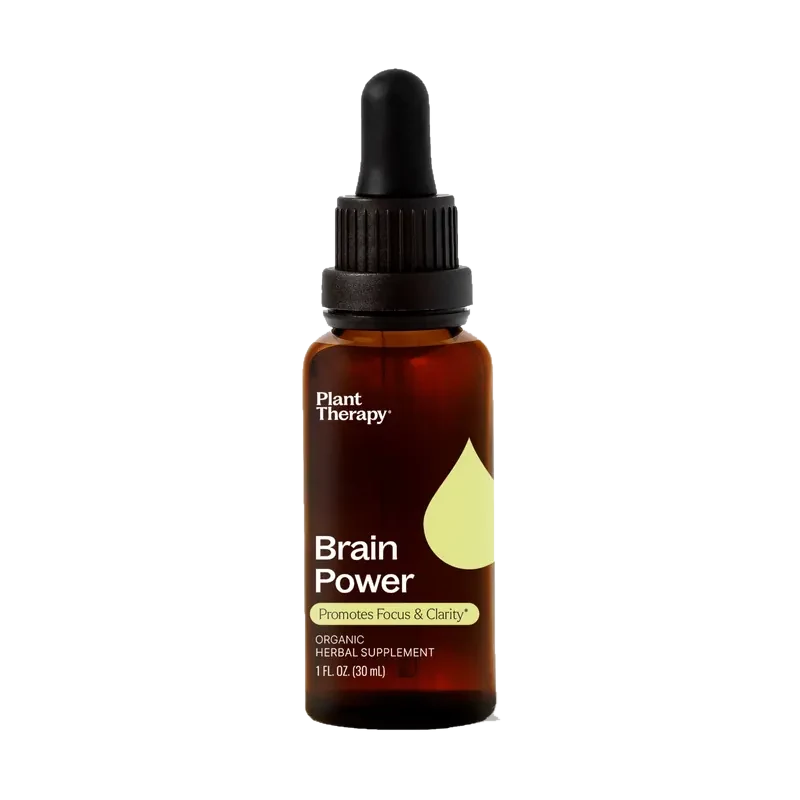
An organic, alcohol-free liquid herbal extract with five botanicals traditionally used for focus and clarity.
SEE THE BOTTLE AND THE TERMSSold by Plant Therapy, Inc., Twin Falls, Idaho · 30 mL with a glass pipette · about 20 servings · shake well, then one to three servings daily in water, juice or tea · 90 days to send it back, opened bottles included
What men ask me across the rail
Is this medicine?
No. It is a dietary supplement: five organic plant extracts carried in vegetable glycerin and water.
How long does one bottle last?
Twenty servings. That is twenty days at one serving, ten at two, under a week at three, and the label allows all three.
How much of each plant am I getting?
Nobody outside the company knows. The panel prints 1,755 milligrams for the five together and lists them in descending order of weight, which is all the law requires.
Which plant here has the best evidence?
Oat seed, and it is mixed. One 29-day trial in 132 adults aged 35 to 65 came out in its favor, [1] and a 12-week trial in 37 adults around 67 found no change at all. [2]
Why do you keep mentioning the licorice?
Because it carries the one caution on this label worth a conversation. Licorice root contains glycyrrhizin, which in quantity can raise the pressure in the arteries and lower potassium.
Do I really have to shake it?
Yes. It is a suspension in glycerin, so it settles, and the maker prints that instruction before any other.
What if I do not like it?
You have 90 days from the date of purchase, and the seller's terms cover opened and used bottles, refunded against what is left.
Does it taste of anything?
Sweet and spicy, in the seller's own words. Most people take it in a third of a glass of water or a mouthful of juice.
The Label in Sixty Seconds
- One fluid ounce of organic liquid extract in vegetable glycerin, with no alcohol, sold by Plant Therapy, Inc. of Twin Falls, Idaho.
- One serving is 1.5 milliliters, the bottle holds about twenty, and the directions allow one to three servings a day.
- The panel prints one figure, 1,755 milligrams, for five plants together, in descending order of weight and with no split between them.
- Oat seed: one 29-day trial in 132 adults aged 35 to 65 in its favor, [1] and a 12-week trial in 37 adults around 67 that changed nothing. [2]
- Gotu kola: better working memory at 750 milligrams a day in a two-month trial of 28 older adults, [3] and no significant effect on test scores when the randomized trials were pooled. [4]
- Rosemary: a single 750-milligram dose of dried leaf, close to a culinary amount, was associated with faster memory speed in 28 adults averaging 75, while 6,000 milligrams did the opposite. [5]
- Licorice root: no trial on memory or concentration in healthy adults that I could cite, a role in the formula that is largely taste, and the one caution here worth a pharmacy conversation.
- Lion's mane: 3.2 grams a day for 12 weeks in 31 adults over 50, [6] which is nearly twice this entire blend, and 1.8 grams in a single-dose study in adults aged 18 to 45. [7]
- No standardization percentage is printed for any of the five, so the only figure you are given is total weight.
- Certified organic by ECOCERT, manufactured in the USA, with a street address and a telephone answered six days a week.
- Ninety days to send it back, opened bottles included, refunded against what is left; after that, account credit.
- Before any of it: the water, the hour of the day, your hearing, and the shape of what you eat. [8] [9] [10]
What Twenty Servings Are Actually Worth
Here is the whole thing in one breath.
This is an honestly made bottle from a company you can find on a map, with one plant at an amount a kitchen could match, one plant at a small fraction of its own trial, and three in between that nobody outside Idaho can weigh.
The front panel promises focus and clarity, and the panel on the back cannot tell you how much of anything is behind that.
If you are a man who would rather take five plants he can name than a capsule with eighteen names on it, who will run one bottle as a test with a date written on the box, and who will ask the pharmacist about the licorice first, twenty mornings is a reasonable thing to spend.
Not because the front of the bottle says so.
Because you will know exactly what you took, for how many days, at what hour, and you will have twenty lines in a notebook telling you whether it mattered.
And if it did not, you have until day ninety to say so.
Shake it every time, take it at the same hour, write one line a night, and let the notebook decide instead of the label.
The same amber ounce, at the seller's own counter
An organic, alcohol-free liquid herbal extract with five botanicals traditionally used for focus and clarity.
SEE THE BOTTLE AND THE TERMSPlant Therapy, Inc. · 621 Washington St. S., Twin Falls, Idaho · certified organic by ECOCERT · 30 mL, about 20 servings · 90 days from purchase, opened bottles included
P.S. If you take one thing from this page, take the two numbers.
One thousand seven hundred and fifty-five milligrams, shared by five plants with no split printed.
Three thousand two hundred milligrams, which is what the lion's mane trial used on its own.
P.P.S. If the fog has been there for a year, and it is there before the coffee as well as after it, talk to your own clinician before you buy anything at all.
A one-ounce bottle of plant extract was never going to answer a question that a conversation and a blood test answer in twenty minutes.